Faculty
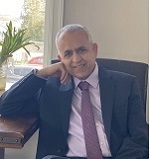
Dr. Ayman Aljarrah
Director
Professor
902-585-1632
E-mail
Dr Ayman Aljarrah
Credentials
- B.Sc. (Yarmouk University)
- M.Phil. (Yarmouk University)
- Ph.D. (University of Calgary)
Teaching Interests
- Teaching Mathematics in Elementary School 1
- Teaching Mathematics in Elementary School 2
Research Interests
- Dr. Ayman Aljarrah has consciously maintained two streams of interest––collectivity and creativity—in mathematics learning environments. In his research, he always concentrates on the interactions between all the agencies in the learning environment—the program of study, the people in the classroom, and the materials and tools—and how such interactions trigger and sustain teachable moments. Indeed, Dr. Aljarrah is interested in more than one aspect of mathematics education and teacher education (e.g., mathematical understanding, mathematical creativity, the process of teacher education, and processes of mathematical thinking).
Publications
- Aljarrah, A., & Towers, J. (2023) The emergence of collective mathematical creativity through students’ productive struggle. Canadian Journal of Science, Mathematics and Technology Education. https://doi.org/10.1007/s42330-023-00259-0.
- Aljarrah, A., & Preciado Babb, P. (2022). Shifting metaphors as a trigger for creativity: A review of students’ mathematical creative acts. In S. A. Chamberlin (Ed.), Proceedings of the 12th International Conference on Mathematical Creativity and Giftedness (MCG 12) (pp. 59-65). Alexis Park All Suite Resort and Conference Center, Las Vegas, NV, USA.
- Aljarrah, A., & Towers, J. (2021). Productive struggle leading to collective mathematical creativity. In D. Olanoff, K. Johnson, & S. M. Spitzer (Eds), Proceedings of the 43rd Annual Meeting of the North American Chapter of the International Group for the Psychology of Mathematics Education (PME-NA 43) (pp. 1172-1182). Philadelphia, Pennsylvania/ USA, during October 14-17.
- Putra, Z. H., Dahnilsyah, D., & Aljarrah, A. (2021). A praxeological analysis of pre-service elementary teacher-designed mathematics comics. Journal on Mathematics Education, 12 (3), pp. 563-580.
- Aljarrah, A. (2020), Describing collective creative acts in a mathematical problem-solving environment. The Journal of Mathematical Behavior, Volume 60.
- Aljarrah, A., & Towers, J. (2019). Discerning two creative Acts: Expanding possibilities and divergent thinking. In M. Nolte (Ed.), Proceedings of the 11th International Conference on Mathematical Creativity and Giftedness(MCG 11) (pp. 103-108). University of Hamburg, Hamburg, Germany.
- Towers, J., Aljarrah, A., & Martin, L. (2019). Exploring aspects of preservice teachers’ mathematical literacy through mathematics autobiographies. In S. Otten, A. G. Candela, Z. de Araujo, C. Haines, & C. Munter (Eds.), Proceedings of the 41st Annual Meeting of the North American Chapter of the International Group for the Psychology of Mathematics Education (PME-NA) (pp. 1304-1308). St. Louis, MO: University of Missouri.

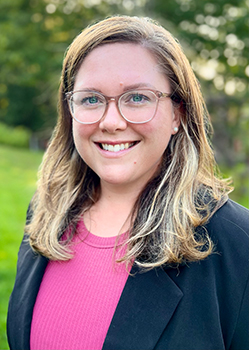
Natalie Dempsey
Lecturer
E-mail
246 Seminary House
Natalie Dempsey
Credentials
- BA (Hons) - Trent University
- B.Ed., Primary/Junior Studies - Trent University
- M.Ed., Developmental Psychology - University of Toronto
Teaching Interests
- Assessment for Teaching and Learning (EDUC 4433)
- Teaching Elementary School Social Studies (EDUC 4243)
- Principles and Practices 1 (EDUC 42D3)
Research Interests
- I am eager to delve into the exploration of developing assessment-capable learners and investigating influences on learning outcomes. In my work, I aspire to incorporate the principles of visible learning, self-regulation, and executive functioning, with a specific emphasis on comprehending their impact on student achievement and academic success. This carries over from my work as a recent elementary school teacher, working with students from Kindergarten through Grade 8.
- I am dedicated to contributing to the field of teacher education by examining effective instructional strategies and interventions that nurture the growth of assessment-capable pre-service teachers. I am inspired to make contributions to the field, advance our understanding of effective teaching, learning and assessment practices, and align with Acadia University's commitment to decolonization, equity, diversity, and inclusion.
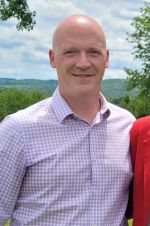
Ryan Hainstock
Instructor
E-mail
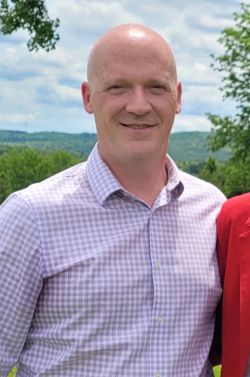
Prof. Ryan Hainstock
Credentials
- M.Ed., Leadership - Acadia University
- M.Ed., Curriculum Studies (Technology Integration) - Mount Saint Vincent University
- B.Ed., Secondary Education - Acadia University
- B.J., Print Journalism - University of King's College
- B.A., Economics - Acadia University
Teaching Interests
- Digital Literacy and Curriculum
- AI in the Classroom
- Computer Science Methods
- Business Education Methods
- Innovative Education in the Age of Technology
- Cross-Curricular Literacy
Research Interests
Grounded in over two decades of leadership as a district educational technology coordinator, my work focuses on meeting the complex needs of the modern classroom where societal change, evolving pedagogy, and curriculum intersect. By leveraging blended learning, digital literacy, and responsive instructional design, I investigate actionable strategies to support technology-rich learning environments that enhance student achievement and holistic well-being.
I hope to advance the transformational use of technology in education. Central to this vision is empowering educators to navigate digital innovation while steadfastly upholding ethical standards, human-centered practice, and professional agency - especially in a world where advances in technology, like artificial intelligence, intersect with the need to educate future generations of digital citizens.

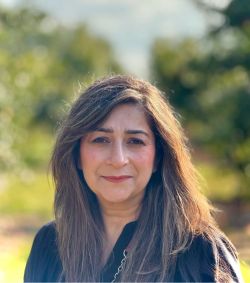
Dr. Samia Javed
Assistant Professor
E-mail
Dr. Samia Javed
Credentials
- Ed.D. in Educational Leadership, Western University, Ontario
- MPEd in Educational Leadership, Western University, Ontario
- Postgraduate Certificate in Education (PGCE), University of Sunderland, UK
- B.A. in Economics
Teaching Interests
- Healthy Learning Environments (EDUC 4053)
- Educational and Pedagogical Leadership
- Social-Emotional Development
- Learning Environments as sites of Belonging, Mattering, and Well-Being
- Early Childhood and Primary Education (Pre-K-3)
Research Interests
Samia has worked in education for over two decades across Canadian and international contexts, in classroom and system-level roles. Her work in early intervention and social-emotional development involves close collaboration with educators, administrators, families, and system teams to foster joyful, identity-affirming, and inclusive learning environments; strengthen children’s well-being; and support culturally responsive partnerships with families.
As a critical scholar-practitioner, she examines how educational environments and school readiness agendas shape children’s experiences, particularly for neurodivergent children and those encountering barriers. She is especially interested in how the “schoolification” of the early years impacts children’s well-being and academic trajectories, and how inclusive practices are understood and enacted.
Her research is organized around two interconnected strands.
The first explores how relationships, environments, and pedagogical approaches shape children’s social-emotional development, belonging, agency and participation. Viewing behaviour as communication, she examines how the relational and environmental conditions surrounding children influence their experiences of school, particularly for those whose identities, perspectives, and ways of being have historically been marginalized or silenced.
The second strand explores kindergarten as a liminal space between early childhood and formal schooling. It examines how early years pedagogies are positioned, enacted, or absent within schools and systems, and how early years knowledge and leadership can inform more inclusive, responsive, and relational school communities.
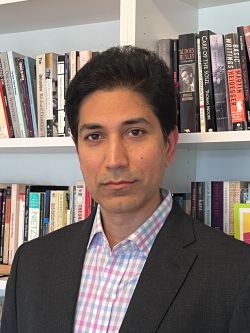
Nurul Hassan Mohammad
Assistant Professor
E-mail
Nurul Hassan Mohammad
Credentials
- Ph.D. Candidate (ABD), Curriculum and Pedagogy (STEM Education), University of Toronto
- M.Ed., Curriculum, Teaching and Learning, University of Toronto
- B.Ed., Biology and Chemistry, University of Toronto
- M.Sc., Zoology, Osmania University
- B.Sc., Osmania University
- Advanced Diploma, Biotechnology and Industrial Microbiology, Centennial College
- Ontario Certified Teacher (OCT)
Teaching Interests
- EDUC 4143 – Teaching Science in Secondary School 1
- EDUC 4153 – Teaching Science: Elementary School
- EDUC 4643 – Teaching Science: Secondary School 2
- EDUC 42F3 – S/T: Science Methods
Teaching Interests
STEM/STEAM education, inquiry-based and experiential learning, curriculum development, critical and justice-oriented science education, and science, technology, society, and environment (STSE) education.
Biography
Nurul Hassan Mohammad is an Assistant Professor of Science Education at Acadia University and a Ph.D. candidate in Curriculum and Pedagogy (STEM Education) at the Ontario Institute for Studies in Education (OISE), University of Toronto. He brings more than two decades of teaching experience across secondary, college, and university settings in Canada and internationally. Before joining Acadia, he taught advanced biotechnology and applied STEM programs at Centennial College and undergraduate biology courses in the Department of Biological Sciences at the University of Toronto Scarborough. His teaching experience spans curriculum and course development, hands-on laboratory instruction, and designing and delivering in-person, online, and hybrid courses. He has supervised more than 250 student research and capstone projects, fostering scientific inquiry, critical thinking, and student agency. His contributions to teacher education include facilitating seminars, delivering invited guest lectures, and sharing his research and pedagogical practices with teacher candidates in OISE's Master of Teaching program. He has also facilitated professional development workshops for school teachers, including educators from the Toronto District School Board (TDSB), focusing on critical, inquiry-based, and justice-oriented science education.
Alongside his teaching, Nurul Hassan has extensive experience in applied research, including industry-funded projects, collaborative laboratory research, and developing innovative STEM technologies. His research experience also includes action research in science education and leadership of a Scholarship of Teaching and Learning (SoTL) project examining digital pedagogy and online learning in postsecondary technological education.
Research Interests
Nurul Hassan's research examines identity, agency, and belonging in STEM education, particularly how students construct and negotiate their identities within the sociocultural and institutional environments of postsecondary STEM education. His doctoral research uses ethnographic inquiry to examine students' identity work and how they navigate STEM education in Canadian college contexts.
His broader scholarship spans critical and activist science education, student agency, justice-oriented pedagogy, and the Scholarship of Teaching and Learning. His collaborative research on STEPWISE pedagogy examines how student-centred, action-oriented science education can foster critical consciousness and meaningful engagement with socioscientific issues.
His emerging research program explores the intersections of generative AI, identity, agency, and intellectual authorship in STEM education and education in general. He is particularly interested in how students negotiate ownership of their intellectual contributions, exercise agency, and seek recognition for their learning in AI-mediated educational environments.
Selected Publications
Peer-Reviewed Book ChaptersHassan, N., El Halwany, S., Schaffer, K., Milanovic, M., Zouda, M., & Bencze, J. L. (2025). Implementing STEPWISE pedagogy in postsecondary STEM education to cultivate student agency towards ecojustice. In J. L. Bencze (Ed.), Building Networks for Critical and Altruistic Science Education: Seeking Ubiquitous Social Justice and Environmental Vitality (pp. 255–278). Springer. DOI: 10.1007/978-3-031-83837-8_12
Bencze, J. L., Del Gobbo, D., Zouda, M., El Halwany, S., Hassan, N., Schaffer, K., & Milanovic, M. (2025). ‘WISE’ engineering in school science: Informed creativity for ecojustice. In J. L. Bencze (Ed.), Building Networks for Critical and Altruistic Science Education (pp. 65–85). Springer. DOI: 10.1007/978-3-031-83837-8_4
Del Gobbo, D., Bencze, J. L., Zouda, M., El Halwany, S., Hassan, N., Ibrahim, S., & Guerrero, G. (2025). STEPWISE cartographies: Student blueprinting of socioscientific issues and actions using actor-network theory. In J. L. Bencze (Ed.), Building Networks for Critical and Altruistic Science Education (pp. 143–165). Springer. DOI: 10.1007/978-3-031-83837-8_6
Peer-Reviewed Journal ArticlesEl Halwany, S., Bencze, L., Hassan, N., Schaffer, K., Milanovic, M., & Zouda, M. (2021). Becoming alive within science education (research): Thinking with life history(ies), bodies and stickiness. Cultural Studies of Science Education, 16(1), 85–107. DOI: 10.1007/s11422-020-09994-4
Nurul Hassan, M., Vivek, S., & Azeem Unnisa, S. (2012). Purification of turbid water with Pisum sativum seeds and solar energy. International Journal of Green and Herbal Chemistry, 1(3), 296–301.
Nurul Hassan. (2016). Groundwater depletion due to water mining–A threat. Journal of Environmental Science, Computer Science and Engineering & Technology, 5, 129–136.
Public ScholarshipNurul Hassan M. (2026). College students are noticing their AI-smoothed writing sounds strong — and not like them. The Conversation. DOI: 10.64628/AAM.v3nepj45a
Dr. Martin Morrison
Associate Professor
902-585-1784
E-mail
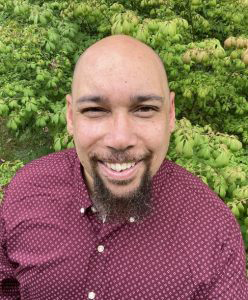
Prof. Martin Morrison
Credentials
- BA, BEd, MEd, PhD
About Professor Morrison
Martin is a member of the African Nova Scotian communities of Danvers and Southville and is the proud father of six children and one grandchild. Martin is a two-time MSVU graduate who holds a Master of Education in Lifelong Learning with a focus on Africentricity and a Bachelor of Education. As a current PhD candidate at MSVU, Martin’s dissertation explores the themes and characteristics of teachers who have been identified as being culturally relevant and responsive to the needs of African Nova Scotian learners by representatives of the community. He is generally interested in research that focuses on examining culturally responsive and relevant and Africentric teaching practices through a critical lens in the interest of responding to the current school climate and student performance gaps experienced by racialized and marginalized learners. He is also the recipient of an Inter-University Research Network Grant to support his research. Martin has 20 years of experience in education. He has worked as a program support assistant; secondary classroom teacher; principal; Regional Coordinator of Race Relations, Cross Cultural Understanding, and Human Rights; Regional Coordinator of African Nova Scotian Education; African Nova Scotian Corporate Strategist; African Nova Scotian Regional Education Officer for the province. As an Assistant Professor at MSVU for the last two years, has more recently taught practicum and seminar classes to first year secondary students, along with the “Social and Cultural Contexts of Teaching and Learning” and “Schooling and Social Justice”. He has served on many boards and education committees in response to the systemic inequities experienced by members of the African Nova Scotian community, including the Black Educators Association, Delmore Buddy Daye Learning Institute, and local community education committees.
Dr. Késa Munroe-Anderson
Associate Professor
902-585-1393
E-mail
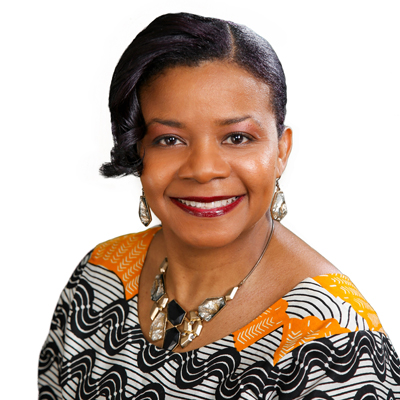
Dr. Késa Munroe-Anderson
Credentials
- Doctor of Philosophy in Educational Studies, Mount Saint Vincent University
- M.Ed. Lifelong Learning, Mount Saint Vincent University
- M.A. English, Acadia University
- B.A. English, Acadia University
Teaching Interests
Primarily in the areas of Equity, Diversity, Inclusion, Racial Justice, Culturally Responsive Pedagogy, Decolonizing Education, Social Justice, the Social and Cultural Contexts of Schooling, Human Rights, Community Engagement, Community Development, Spirituality in Education, the Foundations and Philosophies of Education and Lifelong Learning, and Leadership in Education.
- EDUC 5063 - Foundations of Inclusive Education/ Inclusive Education and Social Justice
- EDUC 4333 - Equity and Inclusive Schoolin
- EDUC 5553 - Topics in Counseling: Culturally Responsive Mental Health
- EDUC 5933 - Equity and Leadership
- EDUC 5913 – Theoretical Perspectives on Leadership
Research Interests
Dr. Munroe-Anderson is a community-oriented, social justice educator and change agent who practices an Africentric, anti-racist, and Black feminist/Womanist approach to research, teaching, and leadership. Her research reflects her wealth of experience engaging African Nova Scotian (ANS) and other marginalized communities, leading in adult education, human rights education and advocacy, and promoting equity, diversity, and inclusion in post-secondary, non-profit, community based, and government organizations. Dr. Munroe-Anderson’s research centres the lived experiences of people of African descent in analysis of every aspect of their lives in education and wider society. Her past and current research explores the role of spirituality in the schooling of ANS adult and junior high school students, defining spirituality as central to the cultural identity of ANS people, as connected to ANS student wellbeing and achievement, and therefore crucial to formal education. Dr. Munroe-Anderson’s research champions decolonizing qualitative methods and methodologies like storytelling and arts informed practices which validate the knowledge production and worldviews of racialized and historically excluded populations. She is interested in research that recognizes the knowledges, voices, perspectives, and experiences of racialized peoples in a manner that is equitable and respectful of their humanity and dignity.
Publications
- Munroe-Anderson, K. (2018). “Dear Ugly Duckling”. In Lindsay Ruck (Eds.) (pp.)Understorey Magazine. Lunenburg, Issue 12: African Nova Scotian Women
- Baillie Abidi, C., Butterwick, S., Brigham, S., Munroe Anderson, K., Parris, S. & Clover, D. (2017). The Limits and Possibilities of Community-University Engagement. Symposium. The Canadian Association for the Study of Adult Education (CASAE) Conference, Ryerson University, Toronto, ON. May 28-30, 2017. (Conference proceedings) Available at: CASAE 2017 Proceedings.pdf?dl=0 (pages 382-386)
- Munroe-Anderson, K. (2015). Telling the Story of "Set Our Spirits Free". In The Canadian Association for the Study of Adult Education (CASAE) 2015 Symposium. (Conference proceedings) Available at: CASAE-2015 CONFERENCE PROCEEDINGS-FINAL.pdf (erta.ca) (pages 231-243)
- Brigham, S., Aladejebi, A., Munroe-Anderson,K., Firempong, K., & Kelly,J.(2015). Adult education and community engagement: African Canadians learning activism for social justice. Symposium. The Canadian Association for the Study of Adult Education (CASAE). Université de Montréal in Montréal, Québec 9 June - 11 June 2015. (Conference proceedings) Available at: CASAE-2015 CONFERENCE PROCEEDINGS-FINAL.pdf (erta.ca) (pages 409-416)
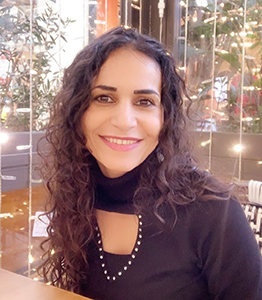
Dr. Ahlam Rahal
Assistant Professor
902-585-1751
E-mail
Dr. Ahlam Rahal
Credentials
- PhD, Educational Psychology (McGill University)
- MA, Educational Counselling (The Max Stern Academic College of Emek Yezreel)
- BA, Behavioral Science - Concentration: Psychology (The Max Stern Academic College of Emek Yezreel, Israel)
Professional Certifications
- School Counselling Professional Certificate
- Certificate in Fundamentals of Cognitive Behavioral Therapy
- Special Education Teacher
Teaching Interests
- School Counselling
- Counselling for Social Justice and Culturally Responsive Mental Health Services
- Ethics in counselling
- Research design
Biography
- Ahlam Rahal (She/her/elle) is a counselling therapist and school counsellor, licensed for Nova Scotia College of Counselling Therapists (NSCCT). Rahal is a researcher interested in critical multiculturalism and power dynamics and social justice in mental health and educational settings. In her professional background, Rahal has worked as a school counsellor with minorities and marginalized social groups in educational and mental health institutions, alongside her work with agencies and community centres to support vulnerable social groups. Rahal also worked as a part-time lecturer at McGill University, in the Department of Educational and Counselling Psychology from the year 2020 to 2023.
Research Interests
- Rahal’s scholarship is organized by three main axes of research: 1) critical theory and mental health, 2) health inequities in sociopolitical and economic contexts, and 3) diversity and inclusion in counselling and mental health. In particular, Rahal’s interdisciplinary research interests include exploring historical, systemic, cultural, and ecological factors that affect /shape individuals’ mental health, identity structure, and mental health services. Reflecting on her professional and personal journey, and relying on her research endeavours, Rahal believes that mental health professionals and educators are leaders and social justice advocates for diverse social groups. Rahal’s methodological expertise is interdisciplinary and mixed methods, with a special love for qualitative research and policy analysis.
Moving forward, Rahal hopes to launch a program of research that bridges the gap between theory and practice in mental health for social justice and would integrate opportunities for student (graduate and undergraduate) training.
Publications
- Rahal, A. (2026). The professional is political: Postcolonial Impacts on Palestinian School Counselling Professional Identities | JORMA International Journal of Health and Social Sciences, 4(1), 10-25.
- Rahal, A. & Arar, Kh. (2025). The epistemology and ontology of school counselling in a colonial ethnocentric education system. JORMA International Journal of Health and Social Sciences Research. Special Issue: Decolonial Scholarship, 3(5), 25-34.
- Rahal, A. (2025). Culturally responsive and critically reflective school counselling professional identity. In K. Berynet, L. Porter, D.C.C. Peluso, & M. Stella (eds). School Counselling in Canada: A Comprehensive Guide. (chapter 20). Canadian Scholars.
- Rahal, A. (2024). Sociocultural and sociopolitical elements of school counselling professional identity: A qualitative analysis of Palestinian school counselling identify. Internaltional Journal of the Advancement of Counselling, Https://doi.org/10.1007/s10447-024-09576-x
- Rahal, A. (2021). Book Review: On the heels of ignorance. Psychiatry and the politics of not knowing. Journal of History in Human Sciences.
- Rahal, A. (2020). Neoliberalism and Palestinians’ health in Israel: A critical historical perspective. Mada-al Carmel for Applied Social Research
- Abu-Baker, Kh. & Rahal, A. (2020). Teachers’ attitudes towards sex education in Israel: A cultural perspective, Jamea’a, 23, (1), 1-41.
- Peleg, O. & Rahal, A. (2012). Physiological symptoms and differentiation of self: A cross- cultural examination. Journal of Intercultural Relations, 36, 719-727.
- Rahal, A. & Amara, H. (2012). Barriers in establishing day-care institutions in Palestinian towns in Israel. Injas center.
Dr. Jennifer Tinkham
Associate Professor
902-585-1898
E-mail
Dr. Jennifer Tinkham
Credentials
- BA (UNB)
- BEd (Acadia)
- MEd (STFX)
- PhD (UAlberta)
Teaching Interests
- Elementary Social Studies (B.Ed)
- Secondary Social Studies (B.Ed)
- Sociological, Historical, Philosophical Foundations of Education (B.Ed)
- Qualitative Research (M.Ed)
- Curriculum Foundations (M.Ed)
Research Interests
- Dr. Tinkham is a former elementary teacher and has been working in Social Studies Teacher Education since 2006. Overall, Dr. Tinkham’s research program is rooted in social studies and Indigenous education. She is actively focused on making spaces for counter narratives in Canadian history, how to decolonize the field of social studies teaching and learning, how to inspire students to engage with and enjoy social studies and how to support teachers along this same journey.
- In 2019, Dr. Tinkham along with several history education co-applicants across Canada were awarded a SSHRC Partnership Grant, valued at $2.5 million from SSHRC and totalling $8,625,498.00 with partnership contributions. The key question that motivates this research project is, What approaches to teaching and learning history contribute to the development of critically and historically minded, engaged citizens? This project is divided into two phases. The first phase focuses on mapping the terrain of History Education in Canada and will run from 2019 until 2023. The second phase of this research is focused on Knowledge Creation and Research and will being in 2023 and finish in 2026. This research has three main thematic areas: 1) historical thinking, 2) Indigenous knowledge and 3) Civic Engagement.
- In addition to the SSHRC research, Dr. Tinkham is collaborating with colleagues in Alberta and Nova Scotia around incorporating Indigenous content and perspectives into teaching. The purpose of this study is to determine ways in which teacher education programs and professional development bodies are best able to support decolonization work in K-12 classrooms by encouraging pre-service teachers to share what they perceive, to be the challenges and opportunities associated with infusing Indigenous content into the curriculum.
Publications
- Orr, J., Robinson, D., Lunney Borden, L. & Tinkham, J. (2017). “There is a difference”: Mi’kmaw students’ perceptions and experiences in a public and band operated school. Journal of American Indian Education, 56 (1).
- Tinkham, J. (2017). The Reconceptualization of Canadian History Curricula in Nova Scotia Schools in Epstein, T. & Peck, C. (Eds.) Teaching and learning difficult histories in international contexts: A critical sociocultural approach. Routledge. )
- Tinkham, J. (2017). That’s not My History! Reflections from Mi’kmaw students on the role of their teachers in decolonizing social studies education in Nova Scotia in Marie Battiste (Ed.) Mi’kmaw Humanities. Cape Breton University Press.
- Tinkham, J. (2014). We’re small enough to close but big enough to divide. The democratic complexities of the Nova Scotia school review process. Alberta Journal of Educational Research, 60 (4). [Backdated issue, accepted September, 2015, published November, 2015]
- Corbett, M. & Tinkham, J. (2014). Small schools in a big world: Thinking about a wicked problem. Alberta Journal of Educational Research, 60 (4). [Backdated issue, accepted September, 2015, published November, 2015]
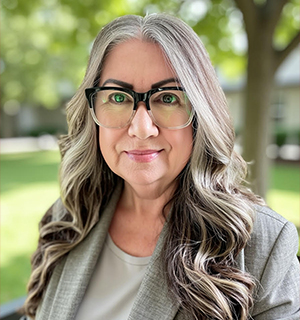
Dr. Deborah Toope
Associate Professor
M.Ed. Coordinator
902-585-1132
E-mail
Dr. Deborah Toope
Credentials
- BEd (Memorial University)
- BSpEd (Memorial University)
- MEd (Memorial University)
- PhD (University of South Australia)
Teaching Interests
- Elementary Language Arts (EDUC 4133 & EDUC 4233)
- Research Design in Education (EDUC 5513)
- Curriculum Studies (EDUC 5633, EDUC 5663, & EDUC 5643)
- Leadership Studies (EDUC 5243)
- Assessment for Teaching and Learning (EDUC 4433)
- Multiliteracies
- New Literacies and Digital technologies
Research Interests
- Dr. Deborah Toope’s ongoing research in literacies and digital technologies, inclusive literacy practices, teachers’ knowledge, teacher research, and action research, has enabled her to form school, district, and university partnerships. Working from a social justice perspective, her current collaborative action research centers on exploring culturally responsive literacy practices in a rural place context with both inservice and preservice teachers. She has supervised preservice teachers in a STEM education program as they designed and carried out action research inquiries focusing on mathematics, science, and technologies in K-6 classrooms. Dr. Toope has extensive experience working in the public school system as a classroom teacher, literacy specialist, principal, program specialist, senior education officer, and director of schools.
Publications
- Toope, D. (2026). Learning to teach through action research: Teachers’ perspectives on their experiences as preservice teachers. in education, 31(2), 121-139.
- Toope, D. (2026). Becoming writers: Intra-activity with digital bookmaking. Language and Literacy, 28(2), 4-24.
- Toope, D., Edwards, M. C., Barr, D., Langford, N., Fultz, E., & Martin, J. (2026). Collaborative Action Research: Cultivating Communities of Inquiry Through School–University Partnerships. LEARNing Landscapes, (30).
- Toope, D., & Van Zoost, S. (2026). Enacting Art-Based Pedagogies: A Collaborative Self-Study of Teacher Identities Through Posthumanism. In B. Bergh, C. U. Edge, A. Cameron-Standerford, & L. Melendez-Rivero, Self-Study as Continuous Mapping (pp. 465–484). Equity Press. https://doi.org/10.59668/2802.28310
- Burke, A., Boisin, B. & Toope, D. (2023). Collaborative pedagogies: Seeking and finding Truth within Indigenous children’s literature through multiliteracies. In D. Hirshberg, M. Beaton, G. Maxwell, T. Turunen, T. & J. Peltokorpi (Eds), Education, Equity and Inclusion: Teaching and Learning for a Sustainable North. Springer publishing.
- Toope, D. & Hammett, R. F. (2014). Digital technologies in the classroom. Pearson Canada.
- Gardner, M., & Toope, D. (2011). A social justice perspective on strengths-based approaches: Exploring educators’ perspectives and practices. Canadian Journal of Education, 34(3), 86–102.
- Toope, D. & Hammett, R. F. (2011). Digital technologies and new literacies: Transforming teachers’ pedagogies. In T. Bastiaens & M. Ebner (Eds.), Proceedings of ED-MEDIA 2011--World Conference on Educational Multimedia, Hypermedia & Telecommunications (pp. 2605-2609). https://www.learntechlib.org/primary/p/38225/.
- Hammett, R. & Toope, D. (2011). Students Taking Charge of their Learning in Digital Environments. In T. Bastiaens & M. Ebner (Eds.), Proceedings of ED-MEDIA 2011--World Conference on Educational Multimedia, Hypermedia & Telecommunications (pp. 2457-2462). https://www.learntechlib.org/primary/p/38204/.
- Hammett, R. F. & Toope, D. (2010). New literacies and digital technologies: Exploring possibilities within the context of English Language Arts curriculum. In M. C. Courtland & T. Gambell (Eds.), Young adolescents meet literature: Intersections for learning, 2nd ed. (pp. 305-331). Pacific Educational Press.

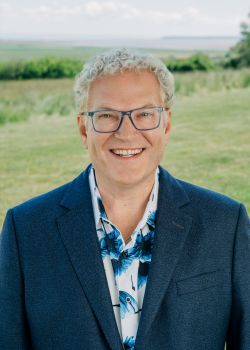
Dr. Steven Van Zoost
Credentials
- BComm (Mount Allison University)
- BA (Mount Allison University)
- BEd (Mount Allison University)
- MEd (Acadia University)
- PhD (University of South Australia)
Teaching Interests
- Assessment for Teaching and Learning (EDUC 4433)
- Teaching English in Secondary School I (EDUC 4353)
- Teaching English in Secondary School II (EDUC 4753)
- Research Design in Education (EDUC 5513)
- Foundations of Educational Inquiry (EDUC 8013)
Research Interests
Dr. Van Zoost has expertise in student and teacher identities, issues of equity in education, classroom assessment, and literacy education. His current research agenda combines his interest in identities with arts-based practices, preservice teacher identities, in-service educators' concerns about equity in education, ideal subject positions in assessment policies since the pandemic, and the influence of artificial intelligence on teacher identities.
- Student and teacher identities
- Equity issues in education
- Student-involved assessment
- Assessment literacy
- Assessment policy implications and advocacy
- A/r/tography
- Artificial intelligence literacy
- Artificial intelligence and teacher subjectivities
Selected Publications
- Van Zoost, S. (in press). Artificial intelligence and the future citizens of Nova Scotia: AI policies in universities. In C. Johnson & N. Delanoy (Eds.), >AI and the Future of Learning: Pedagogical Shifts in K–12 and Higher Education. Springer.
- Van Zoost, S. (2025). Prompting Teacher Identities: A Model for Teacher Subjectivities Constituted Through Artificial Intelligence. Journal of Teaching and Learning, Special Issue: AI and Machine Learning Intensifies Digital Transformation of Higher Education: Opportunities, Possibilities, and Challenges, 19(4), 198–215. https://doi.org/10.22329/jtl.v19i4.10079
- Clarke, C., Van Zoost, S., & Broders, J. (in press). A call for change in summative assessment: Students’ ideas during the COVID-19 pandemic. Journal of the Canadian Association for Curriculum Studies, 21(2), 24–48. https://doi.org/10.25071/1916-4467.40814
- Van Zoost, S., K. A. Shaikh, et al. (2015). Beyond Five Paragraphs: Advanced Essay Writing Skills. Whitby, ON: McGraw-Hill Ryerson.
- Van Zoost, S. (2012). realfriends: A student social action project. Education Canada 52 (1): 25-27.
- Van Zoost, S. (2011). Changes and possibilities: A case study of Nova Scotia classroom assessment policies. Journal of Education Policy 26(1): 83-94. DOI: 10.1080/02680939.2010.498899
Staff Members

Brenda Harris
Graduate Education Course Coordinator
902-585-1466
E-mail
Brenda Harris
Credentials
Michael Landry
B.Ed. Program Manager
Practicum Coordinator
902-585-1711
E-mail
Michael Landry
Credentials
- BSC/B.Ed. (Acadia University)
- M.Ed. (Acadia University)
- ILA Diploma (NSELC)
- Member: Honour Society Acadia University

Jordyn Van Oostrum
Administrative Assistant
902-585-1759
E-mail
Jordyn Van Oostrum